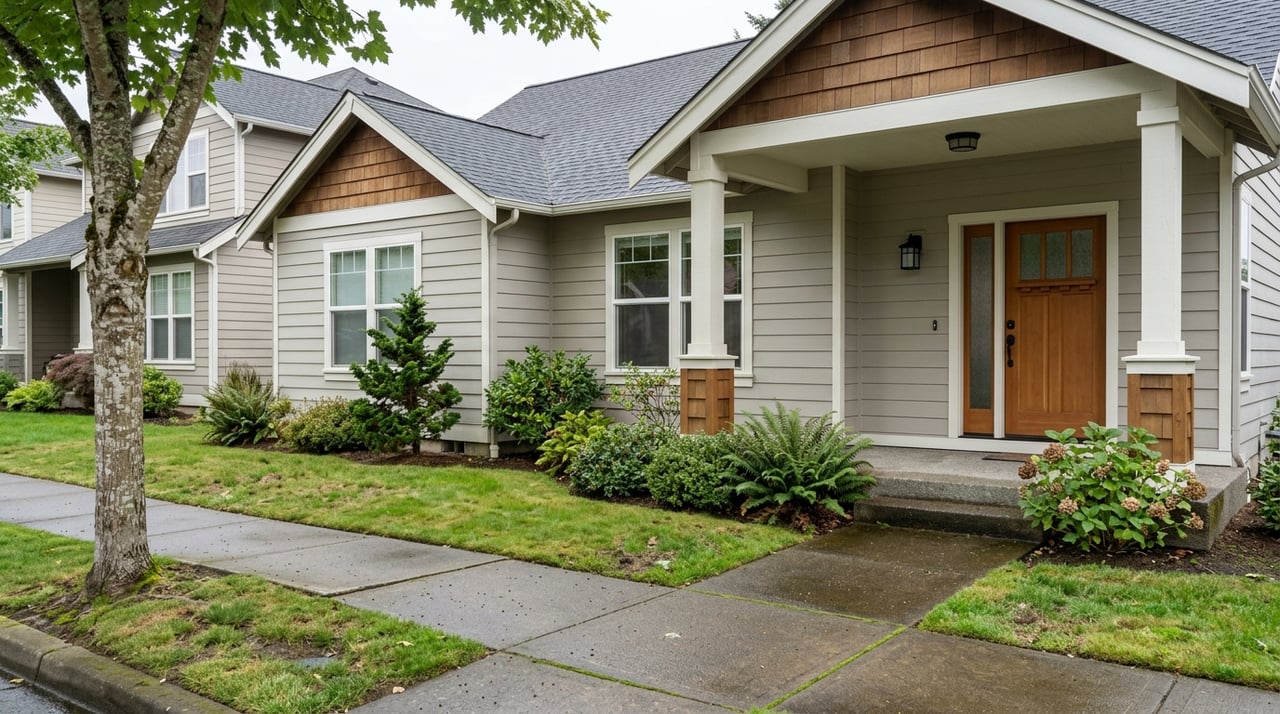
Monmouth Neighborhoods Near WOU: Where To Look
Looking for the right Monmouth neighborhood near Western Oregon University can feel simple at first, until you realize not every area offers the same mix of walkability, housing options, quiet streets, and access to daily errands. If you want to live near campus, your best fit depends on how you plan to spend your time, what kind of home you want, and how much convenience matters day to day. This guide breaks down where to look near WOU, what each area offers, and how to think through your options with confidence. Let’s dive in.
Monmouth is a small Polk County city with 11,651 residents and 3,621 households, which gives it a smaller-scale feel than many college towns. The city is about 20 minutes west of Salem, and WOU notes that Monmouth is also about an hour from Portland, Eugene, and the Pacific Coast. For many buyers, that creates a useful balance between a campus-centered lifestyle and broader regional access.
Commute and transit also play a big role in how livable Monmouth feels near WOU. The Monmouth-Independence trolley connects downtown Monmouth, downtown Independence, and the WOU campus. Cherriots Regional also lists Route 40X for express service between Salem, Independence, Monmouth, and Dallas, plus Route 45 for local service in and between Dallas, Monmouth, and Independence.
If your top priority is being close enough to walk to campus, the immediate street grid around WOU is the most practical place to start. WOU lists its campus at 345 Monmouth Ave N, and the surrounding area forms the clearest walk-to-campus core in town. This is the area that tends to make daily campus access feel easiest.
Streets to watch in this core include:
This part of Monmouth can make sense if you want to reduce drive time, stay close to campus events, or keep transportation simple. It is especially useful for buyers who value convenience over a little extra separation from busier campus activity. If you plan to be on campus often, this area deserves a close look first.
The housing feel near campus is shaped by the surrounding street grid and nearby higher-density areas. Based on the city zoning map and housing strategy, the areas closest to campus and Main Street are also the likeliest renter-heavy pockets. That usually means you may see a broader mix of apartments, attached housing, and smaller-footprint living options in and around the core.
That mix can be a plus if you want flexibility or a lower-maintenance property type. It can also matter if you are comparing homes based on parking, lot size, and how active the surrounding blocks feel. In short, walkability is strongest here, but the overall feel is often more active than areas farther from campus.
If you want to pair WOU access with restaurants, errands, and a more active daily rhythm, downtown Monmouth is another strong option. The city’s comprehensive plan identifies the downtown business district along Main Street as Monmouth’s primary commercial area. That makes this part of town a natural draw for buyers who want more than just campus proximity.
Living near Main Street can help if you like being able to reach businesses and services without driving far. It also keeps you well-positioned for the Monmouth-Independence trolley and other local transit connections. For some buyers, downtown offers the best blend of convenience and local character.
Downtown can be a smart fit if you want a home base that feels connected to both WOU and everyday needs. Buyers who prefer a more urban feel by Monmouth standards often start here. It can also work well if you want quick access to both the campus area and nearby Independence.
Because the higher-density zones are concentrated closer to the core and Main Street, you may also find more rental-style or attached housing nearby. That does not make downtown right or wrong. It simply means you should think carefully about whether you want the energy of a central location or more separation from it.
If you want to stay near WOU but prefer a quieter residential setting, look just beyond the immediate campus grid. The city’s zoning pattern points to lower-density residential areas outside the core as a better fit for buyers seeking a calmer street feel. These areas can offer a different pace while still keeping campus within easy reach.
Areas and streets to keep on your radar include:
These areas may appeal if you are looking for more detached-home options, a little more yard space, or a less campus-centered atmosphere. You still get the benefits of living in Monmouth, but with a layout that often feels more residential. For many buyers, that balance is the sweet spot.
Monmouth’s housing stock is still led by detached single-family homes, which make up 53% of the city’s inventory. Larger apartment complexes account for 31%, other attached homes 12%, and mobile homes 5%. That broad mix gives buyers more than one path near WOU, depending on budget and lifestyle.
The city’s housing strategy also shows that 93% of owner-occupied units are detached homes or mobile homes. Owner-occupied homes are also much more likely to have three or more bedrooms, while renter-occupied units are much more likely to have two or fewer. If you want more space or are focused on a traditional single-family layout, the lower-density edges around campus may line up better with your goals.
One of Monmouth’s strengths is variety. The city can credibly be described as a place where you can find apartments, townhome-style units, starter homes, and detached homes within the same small market. That matters because buyers near WOU are not all looking for the same thing.
Monmouth is also more renter-heavy than Polk County overall. Census data shows an owner-occupied housing unit rate of 47.4% in Monmouth, compared with 64.7% for Polk County. If you are shopping near WOU, that helps explain why the core often feels more mixed in housing type and tenure than some nearby communities.
The Census reports a median value of $413,200 for owner-occupied homes in Monmouth. That is close to Salem’s $416,900, higher than Independence’s $378,800, and lower than Polk County’s $454,700 and Corvallis’s $502,900. For buyers who want access to WOU without Corvallis-level pricing, that middle-ground position can be appealing.
For renters or buyers comparing ownership to renting, Monmouth’s median gross rent is $1,114. That is below Salem’s $1,400, Corvallis’s $1,391, and Independence’s $1,665. Even if you plan to buy, that data helps frame how Monmouth fits into the broader Mid-Valley market.
The best Monmouth neighborhood near WOU depends on what matters most in your day-to-day life. A short walk to campus, easy access to Main Street, or a quieter street just outside the core can each be the right answer. The key is matching the area to your routine instead of choosing based on distance alone.
Here are a few simple ways to narrow your search:
It also helps to define what “near WOU” means to you. For one buyer, that means a true walk-to-campus location. For another, it means a quieter neighborhood with a short drive, trolley ride, or bus connection.
Because Monmouth is compact, small changes in location can shape your daily experience more than you might expect. A few blocks can change how easy it is to walk to campus, how close you are to Main Street, or how residential the area feels. That is why neighborhood-level guidance matters when you start comparing homes.
If you are buying in Monmouth, it helps to work with a team that understands how the campus core, downtown, and lower-density edges differ in real life. The right guidance can help you focus faster, compare options more clearly, and avoid wasting time on homes that do not fit how you want to live.
Whether you want a walkable location near WOU, a single-family home just outside the core, or help comparing Monmouth to nearby markets, Dieter Wehner and the iHomes Team can help you make a confident move with local insight and responsive support.
We pride ourselves in providing personalized solutions that bring our clients closer to their dream properties and enhance their long-term wealth. Contact us today to find out how we can be of assistance to you!
Get In Touch With Our Team To Learn More
iHomes Team
309 Pacific Avenue N Monmouth, OR 97361